
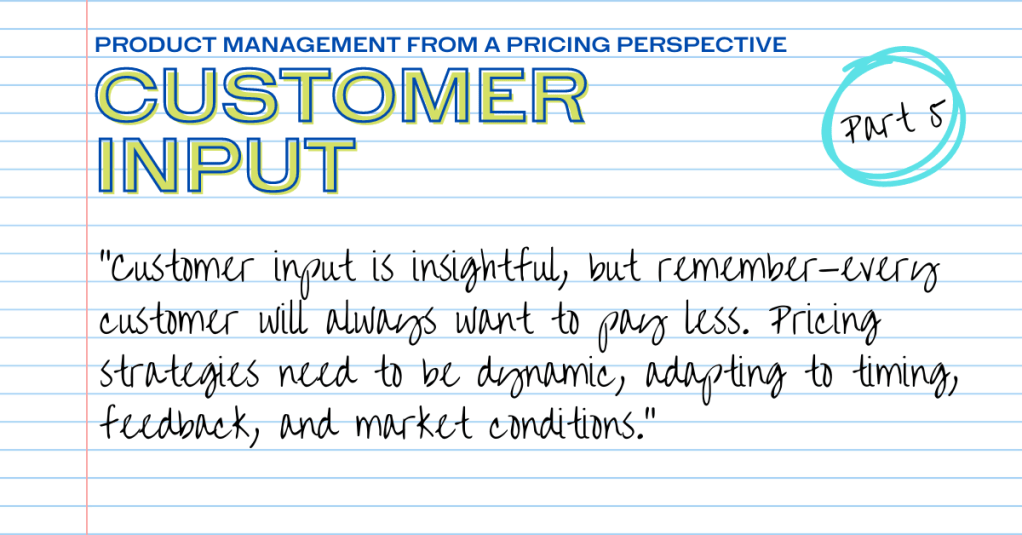
Part 5: Customer Input
When it comes to pricing, Customer Input can be tricky, although it will be insightful and can help to shape our pricing strategy, keep this in mind: every customer will always want to pay less – that’s the reality.
Pricing strategies need to be dynamic, timing for customer input can either be before launch, during, or after, it really depends on your timeline and budget. You could get customer input in a variety of ways:
1️⃣ Focus groups: if you got the budget, go for it! Be sure people in the focus group are influencers on the decision of what and why to buy. I strongly recommend doing this in partnership with a market research agency. Nowadays, focus groups don’t have to be in person, there are really cool digital tools for you to do them online, like Discuss.
2️⃣ Surveys: this one is “simple”, it’s a set of questions that you send to a sample of people. Depending on the size of the sample, data gathered from surveys can be statistically significant, which means that the information you get from the survey is meaningful and reliable for decision making. IMPORTANT: Keep them short. The way you inquire about willingness to pay will depend on what you’re offering. For example, for a product with superior features, you can have simple Yes/No questions as… This product has “x” feature, would you pay “x”% more than this “other” product?
3️⃣ Test: launch your product in one test market – either one region or one channel or mix of both. If you’re planning to have marketing support for the real launch, have marketing support for the test launch, so you’ll have the same factors affecting willingness to pay. Define your timeline and TRACK!
4️⃣ Product reviews: this is pure gold! There’s a lot of information at our fingertips, and guess who can help… AI! You may have to do the job of finding the websites with the reviews, take note of which ones are helpful (copy + paste them in a Word Doc) and ask AI for help. Bazaarvoice has a really cool tool called Premium Network Insights, with the help of AI, you get insights and sentiments of your products and competitors in seconds.
5️⃣ Digital tools: if you have the budget, there’s a lot of online monitoring tools. Just beware of the caveats – maybe you’ll get only online pricing and not in-store. Be careful not to be reactive without analyzing, you may be in a price war before you know it. One useful tool I know PriceSpider.
📓 I’ll leave you with some homework, how does cognitive dissonance play in your overall marketing strategy when it comes to pricing?
📢 Stay tuned for Part 6: Monitor & Adjust!
 Lucia Villegas
Leave a comment